Daniel Gelinas Daniel Gelinas

Beyond Bike Sharing: Building Systems That Actually Scale

Bike sharing solved access.

But it didn’t solve reliability.

The real barrier to cycling isn’t getting a bike—
it’s knowing your trip will work from start to finish.

As cities confront space limits, rising operational costs, and system complexity, a new approach is emerging:

  • not more bikes

  • but better infrastructure

Why the future of urban mobility depends on infrastructure—not fleets

Introduction: We Solved Access. We Didn’t Solve Use.

Over the past decade, cities have invested heavily in bike sharing systems. The logic was simple:

  • If people don’t own bikes, give them access.

And it worked—to a point.

Bike sharing increased visibility and access—but it introduced a system that is operationally heavy, space-constrained, and rarely financially self-sufficient at scale. Because access to a bike is not the same as the ability to rely on it. And that distinction is where the next phase of mobility begins.

What is Bike Sharing — And Where It Breaks Down

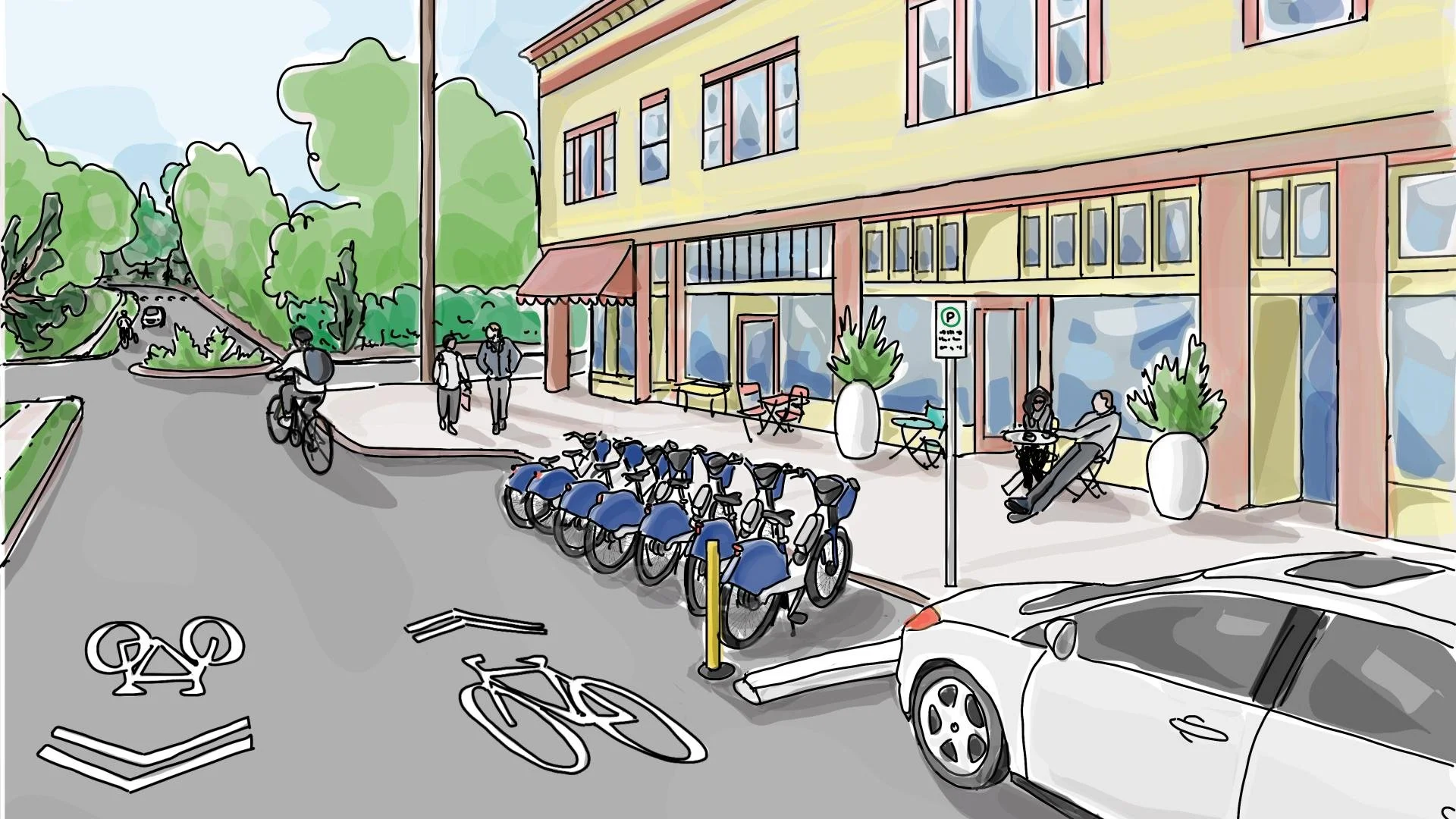
Bike sharing systems are designed around fleet deployment in constrained urban spaces.

At first glance, they appear efficient:

  • high utilization targets

  • flexible access

  • distributed availability

But under the surface, three structural constraints limit their scalability:

1. Space Is Finite — and Contested

Bike sharing doesn’t create space. It competes for it.

  • Sidewalks become parking zones

  • Public right-of-way becomes storage

  • Docked stations require a dedicated footprint in already-constrained areas

As fleets grow, so does friction:

  • pedestrians vs bikes

  • cities vs operators

  • public space vs private usage

Cities respond with:

  • fleet caps

  • designated parking zones

  • enforcement mechanisms

The system scales until space pushes back.

2. Rebalancing Is a Permanent Operational Burden

Bike sharing systems are not self-equilibrating. Demand is directional:

  • morning → residential to commercial

  • evening → reverse

To compensate, operators must:

  • deploy trucks

  • move bikes continuously

  • predict demand patterns

This introduces:

  • operational complexity

  • additional emissions

  • dependency on logistics precision

A simple bike trip is supported by a continuous background operation

3. The Economics Rarely Stand Alone

Bike sharing is often presented as scalable. But in most markets, the model relies on:

  • public subsidies

  • sponsorships

  • municipal contracts

Because it carries:

  • capital costs (fleet, docks, technology)

  • ongoing maintenance (increasing with eBikes)

  • rebalancing logistics

  • customer operations

Revenue per trip is typically insufficient to cover full lifecycle costs at scale.

Bike sharing behaves more like a logistics service than infrastructure

System Reality

As systems scale, three pressures emerge simultaneously:

  1. limited urban space

  2. continuous rebalancing, and

  3. rising operational costs.

Most deployments require ongoing financial support to remain viable.

Bike sharing does not eliminate system friction. It manages it—at a cost.

The “Arrival Problem”

Every mobility system is judged at its weakest point. For cycling, that point is almost always the same:

Where do I leave my bike—and will it still be there when I return?

This single question determines:

  • whether someone chooses to ride

  • whether they invest in an e-bike

  • whether they ride again tomorrow

No secure destination = no system.

This is precisely where bike sharing falls short—it solves access to the trip, but not the certainty of completing it consistently and securely.

From Fleets to Systems

If bike sharing is constrained by space, operations, and cost structure, the question is no longer how to optimize fleets—

It is how to remove the need for them to carry the system in the first place

What is Bike Enabling — A System That Scales with the City

Bike enabling is about removing the structural barriers that prevent cycling from functioning as a reliable system. Where bike sharing introduces vehicles into the city, bike enabling integrates cycling into the built environment.

1. Space Efficiency — Fixed, Predictable, Optimized

Bike enabling defines space instead of competing for it:

  • high-density configurations

  • integration into existing buildings

  • minimal impact on public space

Capacity scales within a controlled footprint

2. No Rebalancing — Because Users Own the Flow

Bike enabling systems are inherently self-balancing:

  • no fleet redistribution

  • no logistics layer

  • no continuous intervention

The system works because users carry the asset—not the operator

3. Operational Simplicity — Infrastructure, Not Service

No:

  • fleet management

  • redistribution teams

  • street-level enforcement

Only:

  • access control

  • light infrastructure maintenance

  • digital platform layer

Shift from operations-heavy → infrastructure-light

4. Financial Integration — From Cost Center to Revenue Layer

Bike enabling can be:

  • integrated into real estate assets

  • monetized via recurring access

  • aligned with ESG strategies

It supports:

  • predictable revenue

  • asset value enhancement

  • reduced car parking demand

No continuous subsidy required

5. Energy & Safety Control — Critical in the e-Bike Era

Bike enabling introduces:

  • controlled charging environments

  • compartmentalized storage

  • fire risk mitigation

This is mobility infrastructure + risk management infrastructure

The Structural Difference: Supply vs System

Bike sharing asks:

How do we provide bikes?

Bike enabling asks:

How do we make cycling work every time?

Conclusion: From Access to Reliability

Bike sharing introduced movement into cities. Bike enabling integrates mobility into the built environment.

And in the long run:

Systems that are embedded outperform systems that must be continuously operated

Bike sharing moves bikes through the city.
Bike enabling allows people to build their lives around them.

Read More