
The Illusion of Energy Transition: When Geopolitics Meets System Reality
Energy at a Chokepoint: From Strait of Hormuz to Global Grid Dependence
A System Under Tension
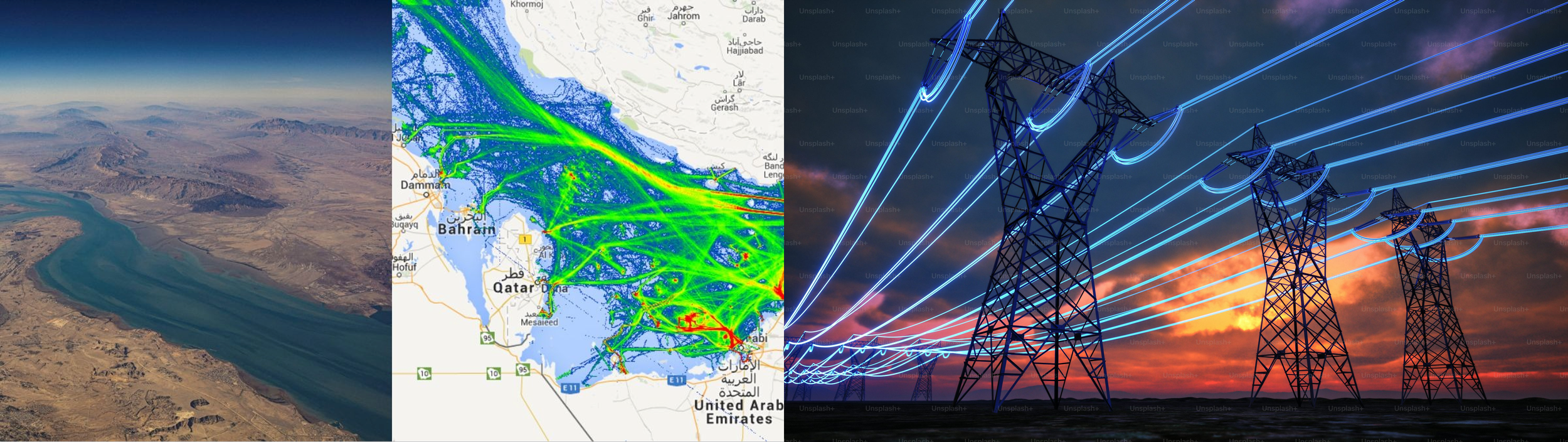
The current tensions around the Strait of Hormuz are not geopolitical noise. They are a live stress test of the global energy system.
Roughly 20% of global oil supply transits through this narrow corridor. Any disruption doesn’t just affect fuel prices.
It reverberates through the entire energy stack — including electricity.
What the Data Actually Tells Us
The Energy Transition Reality: Growth Without Displacement
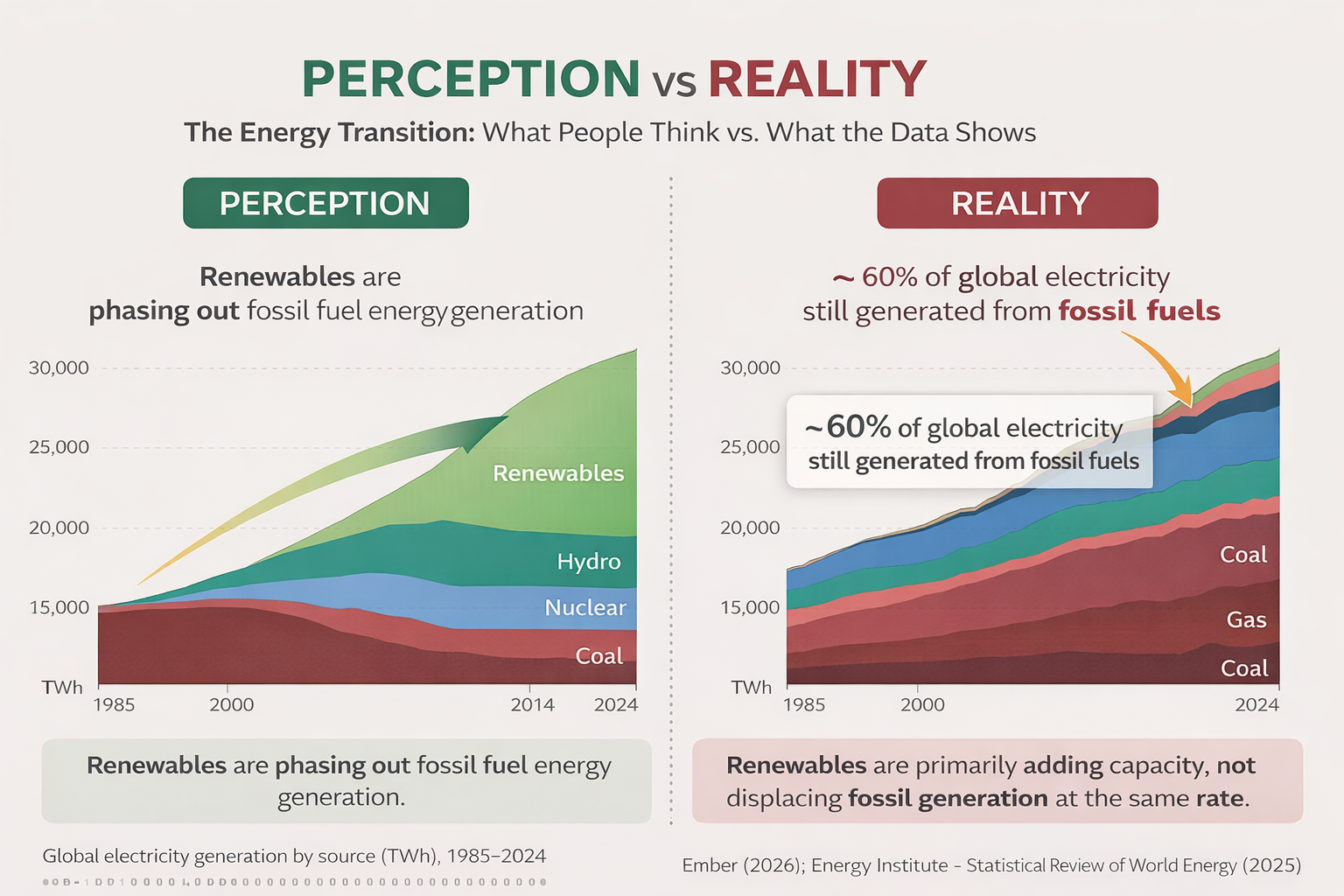
The above chart is not just historical. It is structural.
It shows one uncomfortable reality:
Fossil fuels still dominate global electricity production
Despite decades of transition efforts:
Coal remains the single largest source
Natural gas continues to expand
Oil, though smaller, still plays a role
Renewables are growing relatively fast.
But:
They are being added to the system, not replacing it at the same pace
The Hidden Constraint of Each Energy Source
To understand what happens next, we need to be brutally honest about limitations.
Fossil Fuels (Coal, Oil, Gas)
Strength:
Dispatchable
Energy-dense
Scalable
Limitation:
Geopolitical exposure
Price volatility
Carbon intensity
Highly performant — but globally fragile
Renewables (Solar, Wind)
Strength:
Low marginal cost
Clean generation
Rapid scalability
Limitation:
Intermittency
Storage dependency
Land and transmission constraints
Clean — but not continuously reliable without system support
Hydropower
Strength:
Stable baseload
Long asset life
Limitation:
Geographic dependency
Climate sensitivity (droughts)
Nuclear
Strength:
High output, low emissions
Reliable baseload
Limitation:
Long deployment timelines
Political and regulatory friction
The Core Reality
We are not transitioning from one system to another.
We are layering systems on top of each other
Which creates:
More complexity
More interdependence
More points of failure
Enter Geopolitics: The Gulf Effect
When a geopolitical shock hits oil:
Most assume the impact is limited to:
Gasoline prices
Transportation costs
But the second-order effects are far broader:
Natural gas markets tighten
Electricity prices increase in fossil-dependent grids
Supply chains slow down
Inflationary pressure builds
Energy is not a sector. It is the foundation layer of everything else.
The Coming Months: What to Expect
If tensions persist:
Price Volatility Becomes Structural
Not spikes — sustained instabilityGrid Stress Increases
Especially in regions balancing electrification with fossil backupBehavior Doesn’t Shift Fast Enough
Because alternatives remain incompletePolicy Responses Lag Reality
Infrastructure takes years — shocks happen overnight
The Strategic Blind Spot
We are asking the energy system to be:
Cleaner
Electrified
Scalable
But we are not asking:
Is it resilient under disruption?
Where Mobility Becomes Critical
Mobility is directly downstream of energy.
And today:
Fuel-based mobility is exposed
Electrified mobility is grid-dependent
Which leaves one category:
Low-dependency mobility systems
Active Mobility: Not a Lifestyle — A System Hedge
Cycling is often framed as:
Sustainability
Urban design
Lifestyle
But in this context, it becomes something else:
A resilience layer
Because it:
Requires minimal external energy
Operates independently of global supply chains
Remains functional under constraint
But There’s a Catch
Even the most resilient mobility system fails if:
There’s no secure place to park
No way to charge e-bikes safely
No integration into buildings
No mitigation of battery fire risks
The system breaks at arrival
A More Honest Conclusion
The energy transition is real.
But incomplete.
Geopolitical shocks like the current Gulf tensions don’t create new problems.
They expose the ones we already chose to ignore
Final Thought
We are not moving from:
dirty → clean
We are moving from:
simple → complex
And in that shift:
Resilience is becoming the most undervalued metric in both energy and mobility