
When Conflict Becomes a Systems Test
The current war involving Iran is being framed as a geopolitical event. It is not.
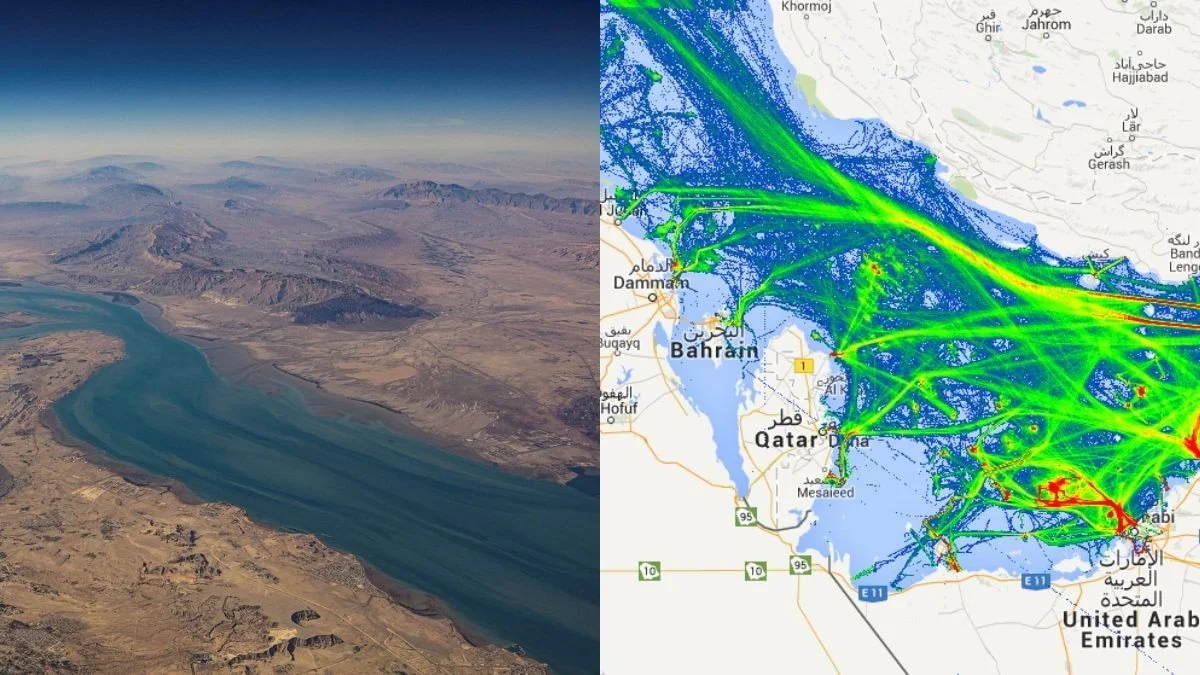
Satellite images reveal massive tanker jam in Strait of Hormuz: What caused it?
Source - India Today
It is a systems test—and one that exposes structural weaknesses far beyond the region itself.
In a globally interconnected economy, there is no such thing as a “local” conflict anymore. What happens in one corridor of the world—particularly one as strategically critical as the Strait of Hormuz—propagates instantly across energy markets, supply chains, financial systems, and ultimately, everyday life.
→ Oil prices move.
→ Shipping routes adjust.
→ Insurance premiums spike.
→ Capital hesitates.
And within days, the effects are visible thousands of kilometers away. For decades, we have optimized our systems for efficiency:
→ Just-in-time logistics
→ Centralized energy production → High dependency on global trade corridors → Infrastructure designed for steady-state conditions
This model works—until it doesn’t. Conflict does not create fragility. When a single maritime chokepoint can influence global inflation, it becomes clear that our systems are not resilient—they are tightly coupled and highly exposed.
Infrastructure Was Never Designed for Disruption
Modern infrastructure is remarkably effective under predictable conditions. But it struggles under stress. Airspace closures, energy shocks, and supply chain rerouting are not anomalies—they are stress scenarios that our systems were never truly designed to absorb.
→ We built for optimization.
→ We did not build for resilience.
And resilience is not something that can be retrofitted overnight. It is a design philosophy.
The Energy Dependency Problem
At the core of this situation lies a fundamental reality: The global economy remains deeply dependent on oil. As long as mobility, logistics, and production systems rely on a limited number of energy corridors, geopolitical events will continue to dictate economic outcomes. This is not a political statement. It is a structural one.
A disruption in energy flow becomes:
→ an inflation problem
→ a supply chain problem
→ a cost-of-living problem
→ a stability problem
All within a very short timeframe.
Toward Distributed Resilience
If there is one lesson to extract from the current situation, it is this:
Resilience must be designed—not assumed.
That means:
→ Diversifying energy sources
→ Decentralizing infrastructure
→ Reducing dependency on single points of failure
→ Building systems that continue to function under stress
In mobility, this translates into something very tangible:
Local, distributed, electrified systems that are less exposed to global shocks. Not as an ideological shift—but as a risk management strategy.
A Design Question, Not a Political One
The question is not who is right or wrong in a conflict.
The question is:
What does this reveal about the way we have designed our systems?
Because the next disruption—whether geopolitical, environmental, or economic—will test the same foundations.
And the outcome will depend less on the event itself than on the resilience of the systems we rely on every day.