
Gas Prices, Conflict, and the Mobility Resilience We Keep Ignoring
When fuel prices rise, the public conversation usually starts with the same questions:
𝐇𝐨𝐰 𝐡𝐢𝐠𝐡 𝐰𝐢𝐥𝐥 𝐩𝐫𝐢𝐜𝐞𝐬 𝐠𝐨?
𝐇𝐨𝐰 𝐥𝐨𝐧𝐠 𝐰𝐢𝐥𝐥 𝐭𝐡𝐢𝐬 𝐥𝐚𝐬𝐭?
𝐖𝐢𝐥𝐥 𝐩𝐫𝐢𝐜𝐞𝐬 𝐜𝐨𝐦𝐞 𝐛𝐚𝐜𝐤 𝐝𝐨𝐰𝐧 𝐨𝐧𝐜𝐞 𝐭𝐡𝐞 𝐜𝐨𝐧𝐟𝐥𝐢𝐜𝐭 𝐞𝐧𝐝𝐬?
Those are valid questions. But they miss the larger point. The real issue is not only the price of gasoline today. It is the repeated vulnerability of households, cities, employers, and local economies to geopolitical shocks they do not control.
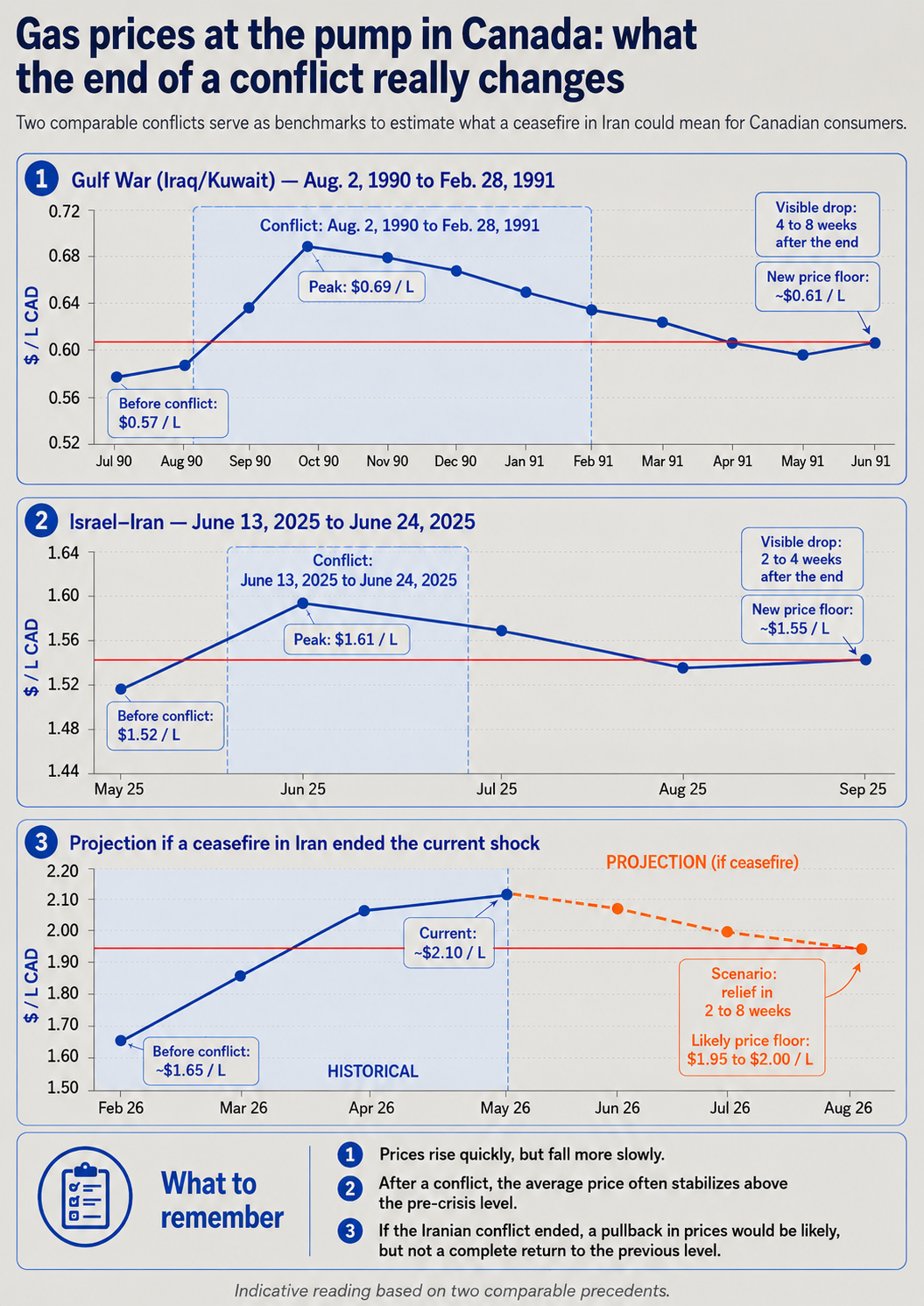
The lesson is clear: 𝐟𝐮𝐞𝐥 𝐩𝐫𝐢𝐜𝐞𝐬 𝐫𝐢𝐬𝐞 𝐪𝐮𝐢𝐜𝐤𝐥𝐲, 𝐛𝐮𝐭 𝐭𝐡𝐞𝐲 𝐫𝐚𝐫𝐞𝐥𝐲 𝐫𝐞𝐭𝐮𝐫𝐧 𝐚𝐥𝐥 𝐭𝐡𝐞 𝐰𝐚𝐲 𝐛𝐚𝐜𝐤 𝐭𝐨 𝐰𝐡𝐞𝐫𝐞 𝐭𝐡𝐞𝐲 𝐰𝐞𝐫𝐞 𝐛𝐞𝐟𝐨𝐫𝐞 𝐭𝐡𝐞 𝐜𝐫𝐢𝐬𝐢𝐬.
That reality should accelerate a serious conversation about sustainable mobility — not as an environmental slogan, but as a resilience strategy.
━━━━━━━━━━━━━━━━━━
𝐖𝐡𝐚𝐭 𝐏𝐚𝐬𝐭 𝐂𝐨𝐧𝐟𝐥𝐢𝐜𝐭𝐬 𝐓𝐞𝐚𝐜𝐡 𝐔𝐬 𝐀𝐛𝐨𝐮𝐭 𝐆𝐚𝐬 𝐏𝐫𝐢𝐜𝐞𝐬
The Gulf War offers a useful benchmark. Before the Iraq/Kuwait conflict in 1990, Canadian gasoline prices were around $0.57 per litre. Prices climbed rapidly, peaking near $0.69 per litre, before gradually declining after the conflict ended. But the key point is this: prices did not immediately return to the pre-conflict level. The visible decline took several weeks, and the new average stabilized above the previous floor. The same pattern appeared again during the Israel–Iran shock in 2025. Prices moved up quickly, but the decline was slower and partial. A ceasefire may reduce pressure, but it does not erase the accumulated effects of the shock.
━━━━━━━━━━━━━━━━━━
𝐓𝐡𝐞 𝐍𝐞𝐰 𝐏𝐫𝐢𝐜𝐞 𝐅𝐥𝐨𝐨𝐫 𝐏𝐫𝐨𝐛𝐥𝐞𝐦
For consumers, the most frustrating part is not only the temporary spike. It is the new normal that often follows. After a crisis, the average pump price may fall, but it frequently settles above the pre-crisis level. That creates a quiet but lasting burden on households. A family may not remember the exact price at the pump three months earlier, but it feels the cumulative effect:
𝐇𝐢𝐠𝐡𝐞𝐫 𝐜𝐨𝐦𝐦𝐮𝐭𝐢𝐧𝐠 𝐜𝐨𝐬𝐭𝐬.
𝐇𝐢𝐠𝐡𝐞𝐫 𝐝𝐞𝐥𝐢𝐯𝐞𝐫𝐲 𝐜𝐨𝐬𝐭𝐬.
𝐇𝐢𝐠𝐡𝐞𝐫 𝐟𝐨𝐨𝐝 𝐩𝐫𝐢𝐜𝐞𝐬.
𝐇𝐢𝐠𝐡𝐞𝐫 𝐬𝐞𝐫𝐯𝐢𝐜𝐞 𝐜𝐨𝐬𝐭𝐬.
𝐋𝐞𝐬𝐬 𝐝𝐢𝐬𝐩𝐨𝐬𝐚𝐛𝐥𝐞 𝐢𝐧𝐜𝐨𝐦𝐞.
This is where the mobility conversation becomes much broader than gasoline. A fuel shock does not only affect drivers. It affects the cost structure of an entire economy.
━━━━━━━━━━━━━━━━━━
𝐖𝐡𝐲 𝐓𝐡𝐢𝐬 𝐈𝐬 𝐚 𝐑𝐞𝐬𝐢𝐥𝐢𝐞𝐧𝐜𝐞 𝐈𝐬𝐬𝐮𝐞
Resilience is not about eliminating the car. That is neither realistic nor necessary. Resilience is about reducing exposure. Every short trip that can be replaced by walking, cycling, an e-bike, or a transit connection reduces the household’s direct exposure to gasoline volatility. Every commuter who can safely ride to work reduces pressure on parking, road capacity, fuel demand, and household transportation costs. Every building, campus, municipality, or employer that enables active mobility becomes less dependent on a fragile energy system.
This is the point too often missed in transportation planning: 𝐬𝐮𝐬𝐭𝐚𝐢𝐧𝐚𝐛𝐥𝐞 𝐦𝐨𝐛𝐢𝐥𝐢𝐭𝐲 𝐢𝐬 𝐧𝐨𝐭 𝐨𝐧𝐥𝐲 𝐚𝐛𝐨𝐮𝐭 𝐞𝐦𝐢𝐬𝐬𝐢𝐨𝐧𝐬. 𝐈𝐭 𝐢𝐬 𝐚𝐛𝐨𝐮𝐭 𝐨𝐩𝐭𝐢𝐨𝐧𝐚𝐥𝐢𝐭𝐲.
When people have no practical alternative, they are trapped by the price at the pump. When people have safe, convenient, secure alternatives, they gain resilience.
━━━━━━━━━━━━━━━━━━
𝐓𝐡𝐞 𝐌𝐢𝐬𝐬𝐢𝐧𝐠 𝐋𝐢𝐧𝐤: 𝐓𝐡𝐞 𝐀𝐫𝐫𝐢𝐯𝐚𝐥 𝐏𝐫𝐨𝐛𝐥𝐞𝐦
Most active mobility discussions focus on the route. Bike lanes matter. Road safety matters. Traffic calming matters. Public transit integration matters. But for many potential daily users, the decisive friction point is not the ride itself. It is the arrival.
𝐖𝐡𝐞𝐫𝐞 𝐝𝐨 𝐈 𝐩𝐚𝐫𝐤?
𝐖𝐢𝐥𝐥 𝐦𝐲 𝐛𝐢𝐤𝐞 𝐬𝐭𝐢𝐥𝐥 𝐛𝐞 𝐭𝐡𝐞𝐫𝐞 𝐰𝐡𝐞𝐧 𝐈 𝐫𝐞𝐭𝐮𝐫𝐧?
𝐂𝐚𝐧 𝐈 𝐬𝐚𝐟𝐞𝐥𝐲 𝐥𝐞𝐚𝐯𝐞 𝐚 𝐛𝐢𝐤𝐞, 𝐚𝐧 𝐞-𝐛𝐢𝐤𝐞, 𝐚 𝐜𝐚𝐫𝐠𝐨 𝐛𝐢𝐤𝐞, 𝐚 𝐛𝐚𝐭𝐭𝐞𝐫𝐲, 𝐚 𝐡𝐞𝐥𝐦𝐞𝐭, 𝐨𝐫 𝐰𝐨𝐫𝐤 𝐞𝐪𝐮𝐢𝐩𝐦𝐞𝐧𝐭?
𝐂𝐚𝐧 𝐈 𝐫𝐞𝐬𝐞𝐫𝐯𝐞 𝐚 𝐬𝐞𝐜𝐮𝐫𝐞 𝐬𝐩𝐚𝐜𝐞 𝐛𝐞𝐟𝐨𝐫𝐞 𝐥𝐞𝐚𝐯𝐢𝐧𝐠 𝐡𝐨𝐦𝐞?
𝐂𝐚𝐧 𝐈 𝐜𝐡𝐚𝐫𝐠𝐞 𝐦𝐲 𝐞-𝐛𝐢𝐤𝐞 𝐢𝐧 𝐚 𝐬𝐭𝐫𝐮𝐜𝐭𝐮𝐫𝐞𝐝 𝐚𝐧𝐝 𝐬𝐚𝐟𝐞𝐫 𝐞𝐧𝐯𝐢𝐫𝐨𝐧𝐦𝐞𝐧𝐭?
This is where many active mobility strategies remain incomplete. We cannot ask people to rely on bikes and e-bikes for daily transportation while treating secure parking as an afterthought. A bike rack may be enough for a short stop. It is not enough to support daily commuting, e-bike adoption, cargo bike use, multi-hour parking, or high-value personal mobility.
To make active mobility practical, we need to solve the destination.
━━━━━━━━━━━━━━━━━━
𝐒𝐚𝐟𝐞 𝐁𝐢𝐤𝐞 𝐏𝐚𝐫𝐤𝐢𝐧𝐠 𝐈𝐬 𝐈𝐧𝐟𝐫𝐚𝐬𝐭𝐫𝐮𝐜𝐭𝐮𝐫𝐞, 𝐍𝐨𝐭 𝐚𝐧 𝐀𝐜𝐜𝐞𝐬𝐬𝐨𝐫𝐲
Secure bike parking should be viewed the same way we view EV charging, transit shelters, sidewalks, or parking management systems: as enabling infrastructure. For regular daily use, cyclists need more than a place to lock a frame. They need a predictable arrival experience.
That means:
𝐒𝐞𝐜𝐮𝐫𝐞 𝐢𝐧𝐝𝐢𝐯𝐢𝐝𝐮𝐚𝐥 𝐩𝐚𝐫𝐤𝐢𝐧𝐠.
Users need protection against theft, vandalism, weather, and uncertainty.
𝐒𝐚𝐟𝐞𝐫 𝐜𝐡𝐚𝐫𝐠𝐢𝐧𝐠 𝐜𝐨𝐧𝐝𝐢𝐭𝐢𝐨𝐧𝐬.
As e-bikes become more common, buildings and municipalities must address the reality of batteries, chargers, and improvised charging practices. Structured, ventilated, controlled parking environments reduce risk compared with ad hoc charging in hallways, garages, offices, or storage rooms.
𝐃𝐢𝐠𝐢𝐭𝐚𝐥 𝐚𝐜𝐜𝐞𝐬𝐬 𝐚𝐧𝐝 𝐫𝐞𝐬𝐞𝐫𝐯𝐚𝐭𝐢𝐨𝐧𝐬.
A commuter should be able to know before leaving home that a secure space is available at the destination.
𝐎𝐩𝐞𝐫𝐚𝐭𝐢𝐨𝐧𝐚𝐥 𝐝𝐚𝐭𝐚.
Owners, municipalities, and employers need to measure usage, occupancy, demand, revenue, and environmental impact.
𝐒𝐜𝐚𝐥𝐚𝐛𝐢𝐥𝐢𝐭𝐲.
The system must work for residential buildings, workplaces, campuses, main streets, trailheads, commercial properties, and municipal destinations. This is what turns bike parking from passive equipment into active mobility infrastructure.
━━━━━━━━━━━━━━━━━━
𝐄𝐧𝐞𝐫𝐠𝐲 𝐕𝐨𝐥𝐚𝐭𝐢𝐥𝐢𝐭𝐲 𝐌𝐚𝐤𝐞𝐬 𝐓𝐡𝐢𝐬 𝐔𝐫𝐠𝐞𝐧𝐭 The current energy environment reinforces the case.
A conflict may end. A ceasefire may be signed. Markets may calm down. But households rarely recover immediately from the shock. Fuel volatility reaches far beyond the pump. It affects commuting, logistics, food costs, construction costs, municipal budgets, business operations, and household confidence. That is why active mobility should be treated as part of an energy resilience strategy. The fastest mobility gains will not come from replacing every car trip.
They will come from replacing the trips that should never have required a car in the first place:
𝐒𝐡𝐨𝐫𝐭 𝐜𝐨𝐦𝐦𝐮𝐭𝐞𝐬.
𝐅𝐢𝐫𝐬𝐭- 𝐚𝐧𝐝 𝐥𝐚𝐬𝐭-𝐦𝐢𝐥𝐞 𝐭𝐫𝐚𝐧𝐬𝐢𝐭 𝐜𝐨𝐧𝐧𝐞𝐜𝐭𝐢𝐨𝐧𝐬.
𝐓𝐫𝐢𝐩𝐬 𝐭𝐨 𝐰𝐨𝐫𝐤.
𝐓𝐫𝐢𝐩𝐬 𝐭𝐨 𝐬𝐜𝐡𝐨𝐨𝐥.
𝐓𝐫𝐢𝐩𝐬 𝐭𝐨 𝐥𝐨𝐜𝐚𝐥 𝐬𝐞𝐫𝐯𝐢𝐜𝐞𝐬.
𝐓𝐫𝐢𝐩𝐬 𝐭𝐨 𝐦𝐚𝐢𝐧 𝐬𝐭𝐫𝐞𝐞𝐭𝐬, 𝐜𝐚𝐦𝐩𝐮𝐬𝐞𝐬, 𝐚𝐧𝐝 𝐦𝐮𝐧𝐢𝐜𝐢𝐩𝐚𝐥 𝐝𝐞𝐬𝐭𝐢𝐧𝐚𝐭𝐢𝐨𝐧𝐬.
These are the trips where walking, cycling, e-bikes, cargo bikes, and transit can have an immediate impact — provided the arrival conditions are safe, secure, and reliable.
━━━━━━━━━━━━━━━━━━
𝐓𝐡𝐞 𝐄𝐜𝐨𝐧𝐨𝐦𝐢𝐜 𝐂𝐚𝐬𝐞 𝐟𝐨𝐫 𝐁𝐮𝐢𝐥𝐝𝐢𝐧𝐠𝐬 𝐚𝐧𝐝 𝐌𝐮𝐧𝐢𝐜𝐢𝐩𝐚𝐥𝐢𝐭𝐢𝐞𝐬
Safe bike parking is not only a public-good investment. It also makes business sense. For buildings, secure bike and e-bike parking can support tenant attraction, employee retention, ESG reporting, and property differentiation. For municipalities, it can reduce pressure on car parking, support local commerce, improve access to public destinations, and make active transportation investments more usable. For employers, it can reduce commuting friction, support wellness objectives, and make lower-cost transportation choices more realistic for staff. For users, it reduces the risk that prevents many people from choosing a bike or e-bike for daily mobility.
The important point is that secure bike parking does not simply store bikes.
𝐈𝐭 𝐮𝐧𝐥𝐨𝐜𝐤𝐬 𝐛𝐞𝐡𝐚𝐯𝐢𝐨𝐮𝐫 𝐜𝐡𝐚𝐧𝐠𝐞.
━━━━━━━━━━━━━━━━━━
𝐅𝐫𝐨𝐦 𝐒𝐮𝐬𝐭𝐚𝐢𝐧𝐚𝐛𝐢𝐥𝐢𝐭𝐲 𝐭𝐨 𝐌𝐞𝐚𝐬𝐮𝐫𝐚𝐛𝐥𝐞 𝐌𝐨𝐛𝐢𝐥𝐢𝐭𝐲
A modern bike parking strategy should not stop at installation. It should generate measurable outcomes:
𝐎𝐜𝐜𝐮𝐩𝐚𝐧𝐜𝐲 𝐫𝐚𝐭𝐞𝐬
𝐔𝐬𝐞𝐫 𝐚𝐝𝐨𝐩𝐭𝐢𝐨𝐧
𝐑𝐞𝐬𝐞𝐫𝐯𝐚𝐭𝐢𝐨𝐧 𝐝𝐚𝐭𝐚
𝐂𝐡𝐚𝐫𝐠𝐢𝐧𝐠 𝐝𝐞𝐦𝐚𝐧𝐝
𝐀𝐯𝐨𝐢𝐝𝐞𝐝 𝐜𝐚𝐫 𝐭𝐫𝐢𝐩𝐬
𝐄𝐬𝐭𝐢𝐦𝐚𝐭𝐞𝐝 𝐠𝐫𝐞𝐞𝐧𝐡𝐨𝐮𝐬𝐞 𝐠𝐚𝐬 𝐫𝐞𝐝𝐮𝐜𝐭𝐢𝐨𝐧𝐬
𝐑𝐞𝐯𝐞𝐧𝐮𝐞 𝐩𝐨𝐭𝐞𝐧𝐭𝐢𝐚𝐥
𝐒𝐢𝐭𝐞-𝐛𝐲-𝐬𝐢𝐭𝐞 𝐩𝐞𝐫𝐟𝐨𝐫𝐦𝐚𝐧𝐜𝐞
𝐑𝐞𝐬𝐢𝐝𝐞𝐧𝐭𝐢𝐚𝐥 𝐛𝐮𝐢𝐥𝐝𝐢𝐧𝐠𝐬.
𝐌𝐮𝐧𝐢𝐜𝐢𝐩𝐚𝐥 𝐩𝐚𝐫𝐤𝐢𝐧𝐠 𝐚𝐫𝐞𝐚𝐬.
𝐓𝐫𝐚𝐧𝐬𝐢𝐭-𝐚𝐝𝐣𝐚𝐜𝐞𝐧𝐭 𝐝𝐞𝐬𝐭𝐢𝐧𝐚𝐭𝐢𝐨𝐧𝐬.
𝐎𝐟𝐟𝐢𝐜𝐞 𝐛𝐮𝐢𝐥𝐝𝐢𝐧𝐠𝐬.
𝐔𝐧𝐢𝐯𝐞𝐫𝐬𝐢𝐭𝐢𝐞𝐬.
𝐓𝐨𝐮𝐫𝐢𝐬𝐦 𝐜𝐨𝐫𝐫𝐢𝐝𝐨𝐫𝐬.
𝐌𝐚𝐢𝐧 𝐬𝐭𝐫𝐞𝐞𝐭𝐬.
𝐂𝐨𝐦𝐦𝐮𝐧𝐢𝐭𝐲 𝐡𝐮𝐛𝐬.
𝐓𝐫𝐚𝐢𝐥 𝐧𝐞𝐭𝐰𝐨𝐫𝐤𝐬.
𝐇𝐢𝐠𝐡-𝐭𝐫𝐚𝐟𝐟𝐢𝐜 𝐩𝐮𝐛𝐥𝐢𝐜 𝐝𝐞𝐬𝐭𝐢𝐧𝐚𝐭𝐢𝐨𝐧𝐬.
This is especially important for real estate owners, municipalities, and organizations under increasing pressure to demonstrate the impact of their sustainability investments. The stronger the data, the stronger the case for expansion. That is where smart bike parking becomes more than infrastructure. It becomes a measurable mobility platform.
━━━━━━━━━━━━━━━━━━
𝐓𝐡𝐞 𝐏𝐫𝐚𝐜𝐭𝐢𝐜𝐚𝐥 𝐏𝐚𝐭𝐡 𝐅𝐨𝐫𝐰𝐚𝐫𝐝
The solution does not need to be complicated. Start where the demand already exists. Deploy secure bike parking where people already want to arrive, then measure usage and expand based on real demand. This is more practical than waiting for perfect conditions. We do not need to convince every citizen to become a cyclist. We need to remove the barriers for those who are already willing, almost willing, or simply waiting for a safer and more reliable way to arrive.
━━━━━━━━━━━━━━━━━━
𝐓𝐡𝐞 𝐑𝐞𝐚𝐥 𝐋𝐞𝐬𝐬𝐨𝐧 𝐅𝐫𝐨𝐦 𝐆𝐚𝐬 𝐏𝐫𝐢𝐜𝐞𝐬
The end of a conflict may reduce fuel prices. But it does not eliminate vulnerability. The deeper lesson is that communities need transportation systems with more flexibility, more local control, and less exposure to global shocks. That means accelerating the deployment of safe, secure, connected bike parking. Not as a symbolic gesture. Not as a secondary amenity. But as infrastructure that makes sustainable mobility usable every day. Because the question is no longer whether gas prices will spike again. They will. The question is whether our cities, buildings, employers, and households will be ready with practical alternatives when they do.
━━━━━━━━━━━━━━━━━━
𝐂𝐨𝐧𝐜𝐥𝐮𝐬𝐢𝐨𝐧
Fuel volatility reminds us of something we already know: a transportation system built around one dominant energy source is fragile. Active mobility gives us a way to reduce that fragility. But people will only change behaviour when the alternative is practical, safe, and reliable.
That starts at the destination.
If we want more people to walk, ride, connect to transit, and use bikes, e-bikes, or cargo bikes for real daily trips, we must solve the arrival problem.
𝐒𝐚𝐟𝐞 𝐛𝐢𝐤𝐞 𝐩𝐚𝐫𝐤𝐢𝐧𝐠 𝐢𝐬 𝐧𝐨𝐭 𝐭𝐡𝐞 𝐞𝐧𝐝 𝐨𝐟 𝐭𝐡𝐞 𝐦𝐨𝐛𝐢𝐥𝐢𝐭𝐲 𝐜𝐨𝐧𝐯𝐞𝐫𝐬𝐚𝐭𝐢𝐨𝐧. 𝐈𝐭 𝐢𝐬 𝐰𝐡𝐞𝐫𝐞 𝐬𝐮𝐬𝐭𝐚𝐢𝐧𝐚𝐛𝐥𝐞 𝐦𝐨𝐛𝐢𝐥𝐢𝐭𝐲 𝐛𝐞𝐜𝐨𝐦𝐞𝐬 𝐩𝐨𝐬𝐬𝐢𝐛𝐥𝐞.