4. The True Impact of Secure E-Bike Parking Over Time
One secure e-bike parking stall can replace up to 900 car trips per year. Here’s how infrastructure turns mobility goals into measurable results.
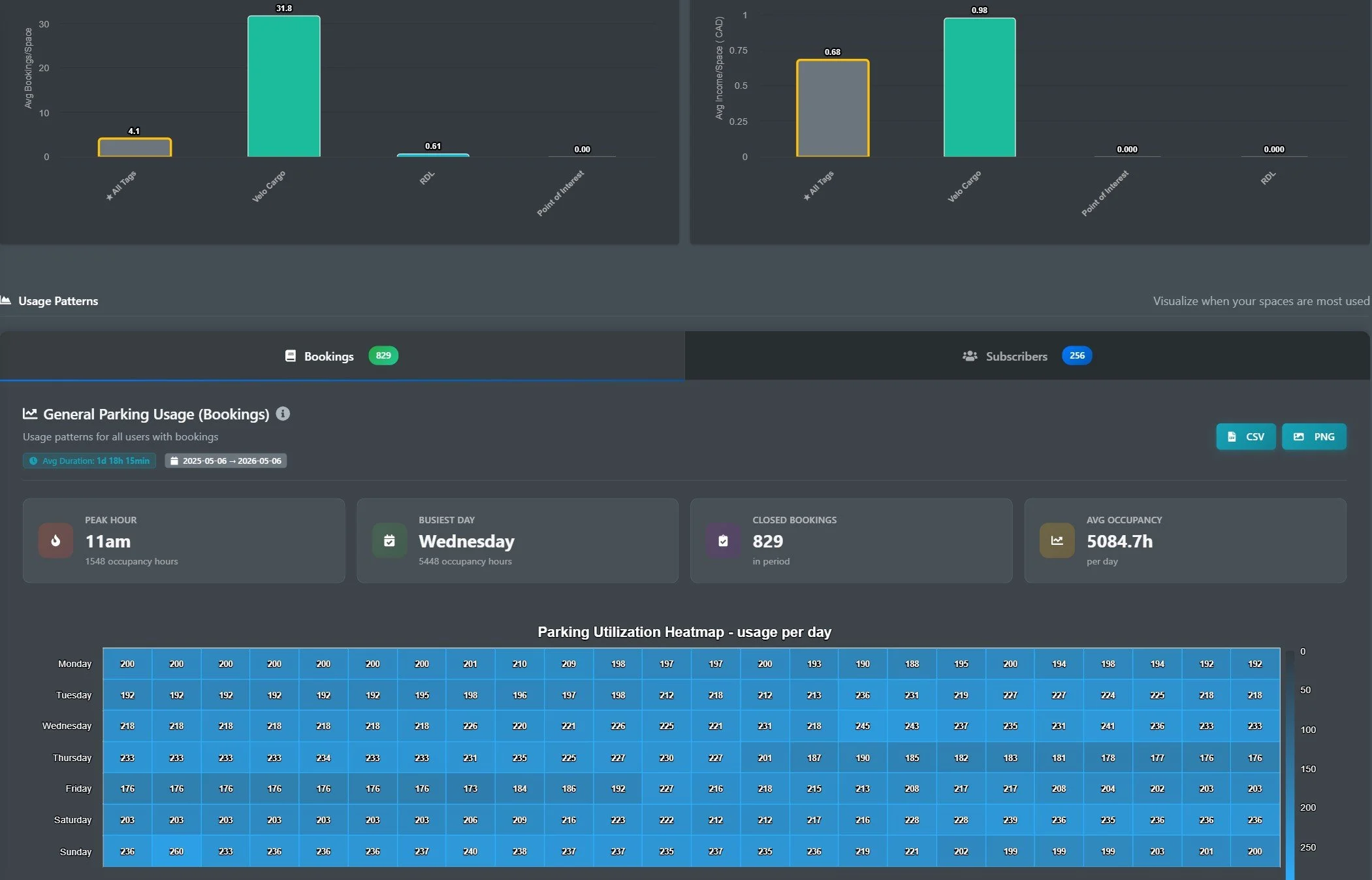
BIKE-OASIS Management Console
Learn why secure e-bike parking is a powerful tool for real estate developers to reduce car dependency, minimize grid impact, and deliver measurable ESG outcomes.
Daily Trip Displacement: How Many Car Trips Can One Stall Replace?
Drawing on Don Cicleto’s extensive European deployment data and early North American usage patterns, a single secure stall typically supports:
1–3 displaced car trips per weekday
2–6 displaced car trips on weekends in mixed-use and retail environments
Higher displacement rates on university campuses, where daily routines are predictable and parking constraints are strong
Using a conservative annual model, this translates to:
400–900 displaced car trips per stall, per year
When deployed at scale—40, 80, or 200 stalls—this creates a quantifiable mobility impact that can be directly integrated into:
GHG Protocol Scope-3 reporting
TCFD climate-risk disclosures
GRESB real-asset sustainability benchmarking
Unlike aspirational mobility targets, secure parking produces verifiable, repeatable outcomes.
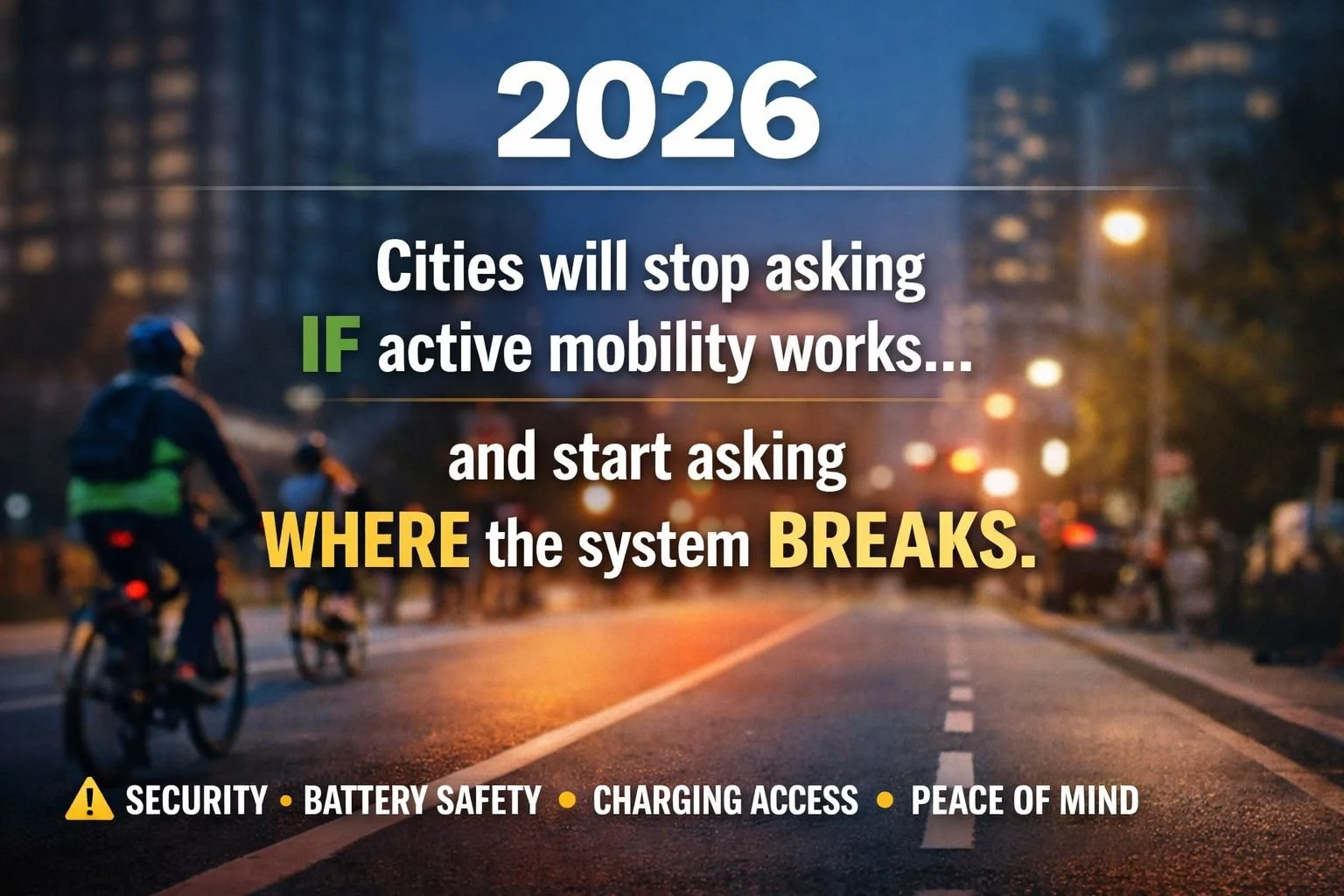
2026 won’t be about convincing people to bike
These are the friction points that determine whether active mobility scales—or stalls. And they matter far more than weather or cold temperatures.
In 2026, the cities that move the needle will be the ones that stop treating cycling as a “mode” and start managing it as a complete system, end-to-end.
Infrastructure is no longer the bottleneck.
Trust is.
2026 won’t be about convincing people to bike.
Where does the active mobility system still fail the user?
- Not at the bike lane.
- Not at the purchase of an e-bike.
- But at the destination: Security. Battery safety. Charging access. End-of-trip confidence.
These are the friction points that determine whether active mobility scales—or stalls. And they matter far more than weather or cold temperatures.
In 2026, the cities that move the needle will be the ones that stop treating cycling as a “mode” and start managing it as a complete system, end-to-end.
Infrastructure is no longer the bottleneck.
Trust is.
#UrbanMobility #ActiveTransportation #Micromobility #SmartCities #VisionZero #ESG #FutureOfCities #BikeInfrastructure #PeaceOfMind
Explore secure bike parking, smart access, and e-bike charging solutions: