
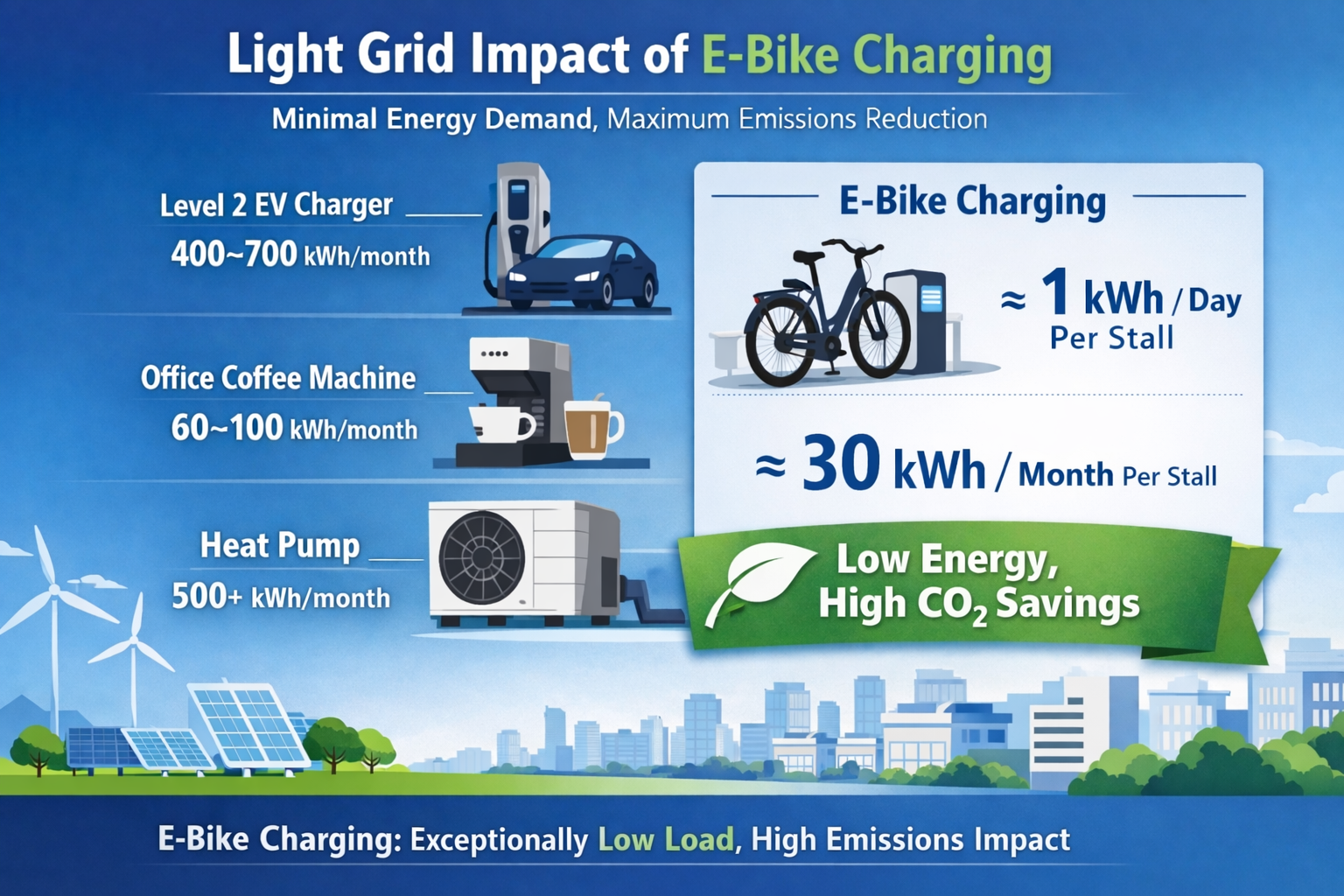
3. Grid Impacts: Modern E-Bike Charging Is Exceptionally Light
One of the most persistent misconceptions surrounding e-bike infrastructure is that charging represents a meaningful burden on building electrical systems or local grids. In reality, e-bike charging is one of the lowest-impact electrification loads available.
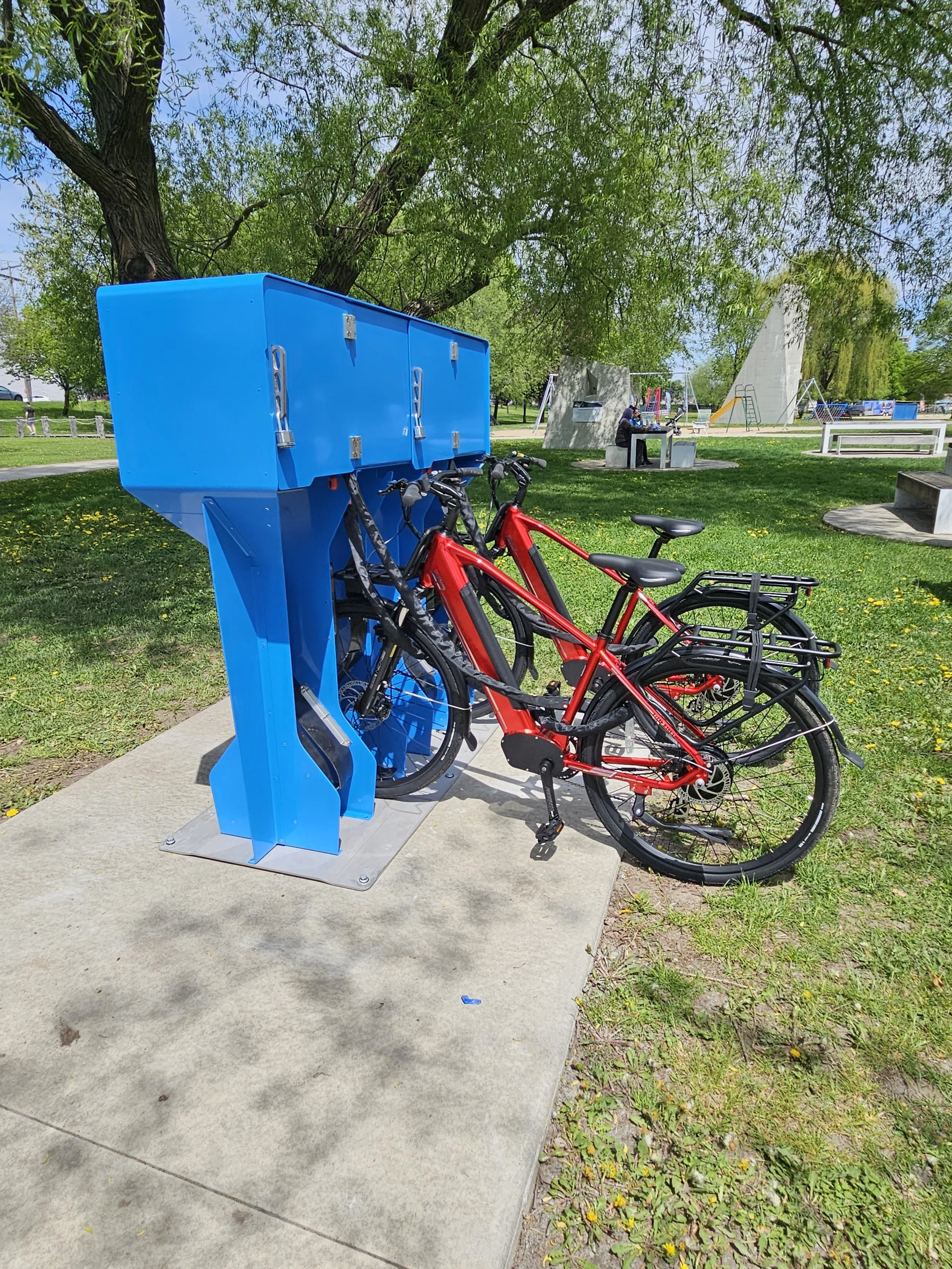
2. Why Secure Parking Is the Trigger for Mode Shift, Not Bike Lanes Alone
Secure End-of-Trip Infrastructure: The Real Catalyst Behind Mode Shift
For more than a decade, urban mobility strategies in North America have focused heavily on in-route infrastructure—bike lanes, shared paths, and protected intersections. While these investments are necessary, experience from European deployments and early North American pilots shows they are not sufficient to trigger sustained mode shift on their own.
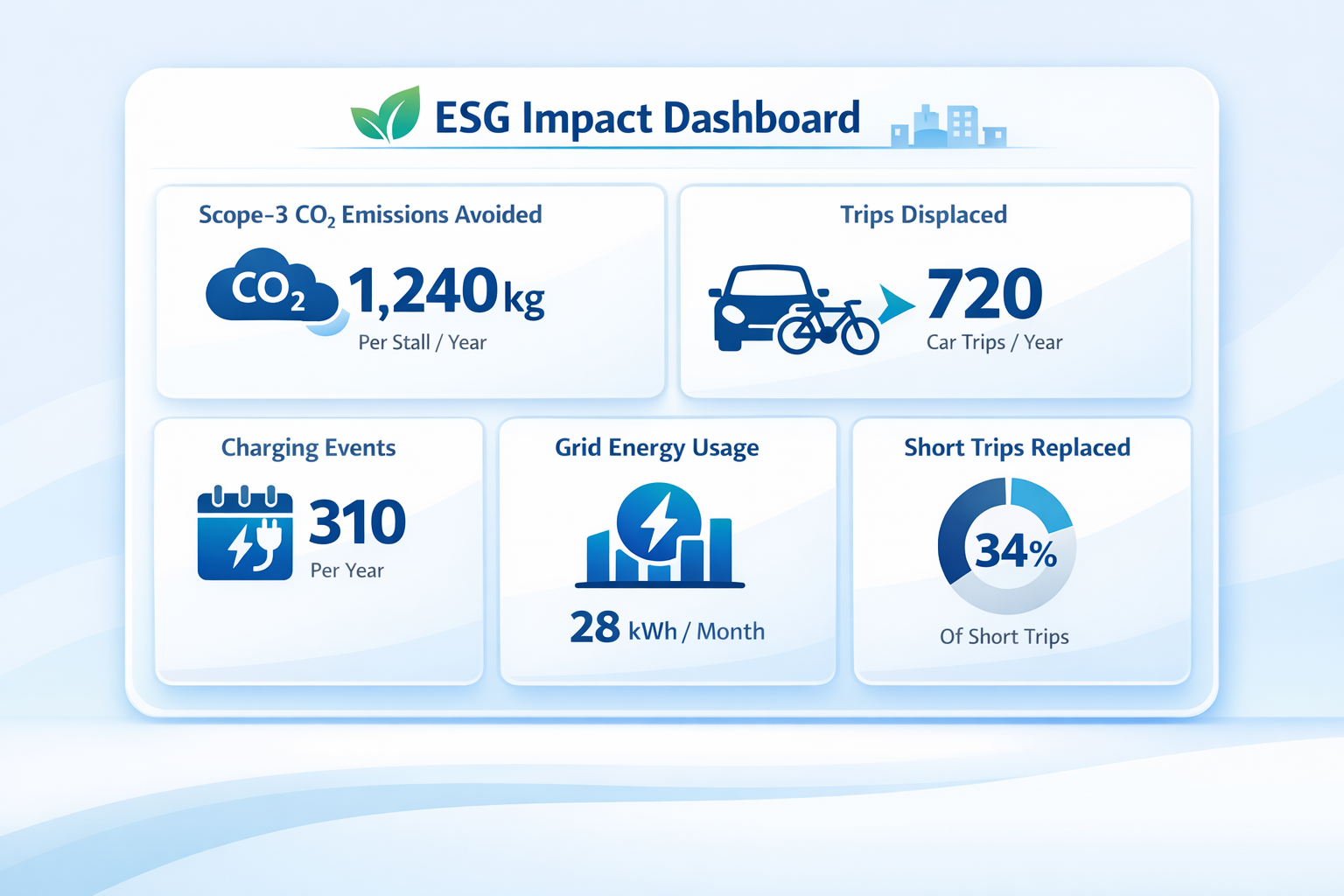
1. The ESG Impact of Shifting Short Urban Trips from Cars to bikes/e-Bikes
Short urban car trips—those under 7 km—represent one of the largest and most avoidable sources of transportation emissions in North American cities. They are also the easiest to replace with active mobility, especially e-bikes. But the transition is only possible when riders are confident that their bicycle or e-bike will remain safe, fully charged, and protected from fire risks throughout the day.
Secure end-of-trip infrastructure—such as the Velovoute family of solutions paired with the Bike Oasis digital platform—has emerged as a critical ESG lever capable of enabling large-scale mode shift while generating measurable environmental and operational value.
This article quantifies the core ESG impacts: CO₂ avoidance, grid-friendly charging, and daily trip displacement supported by a single secure parking stall.
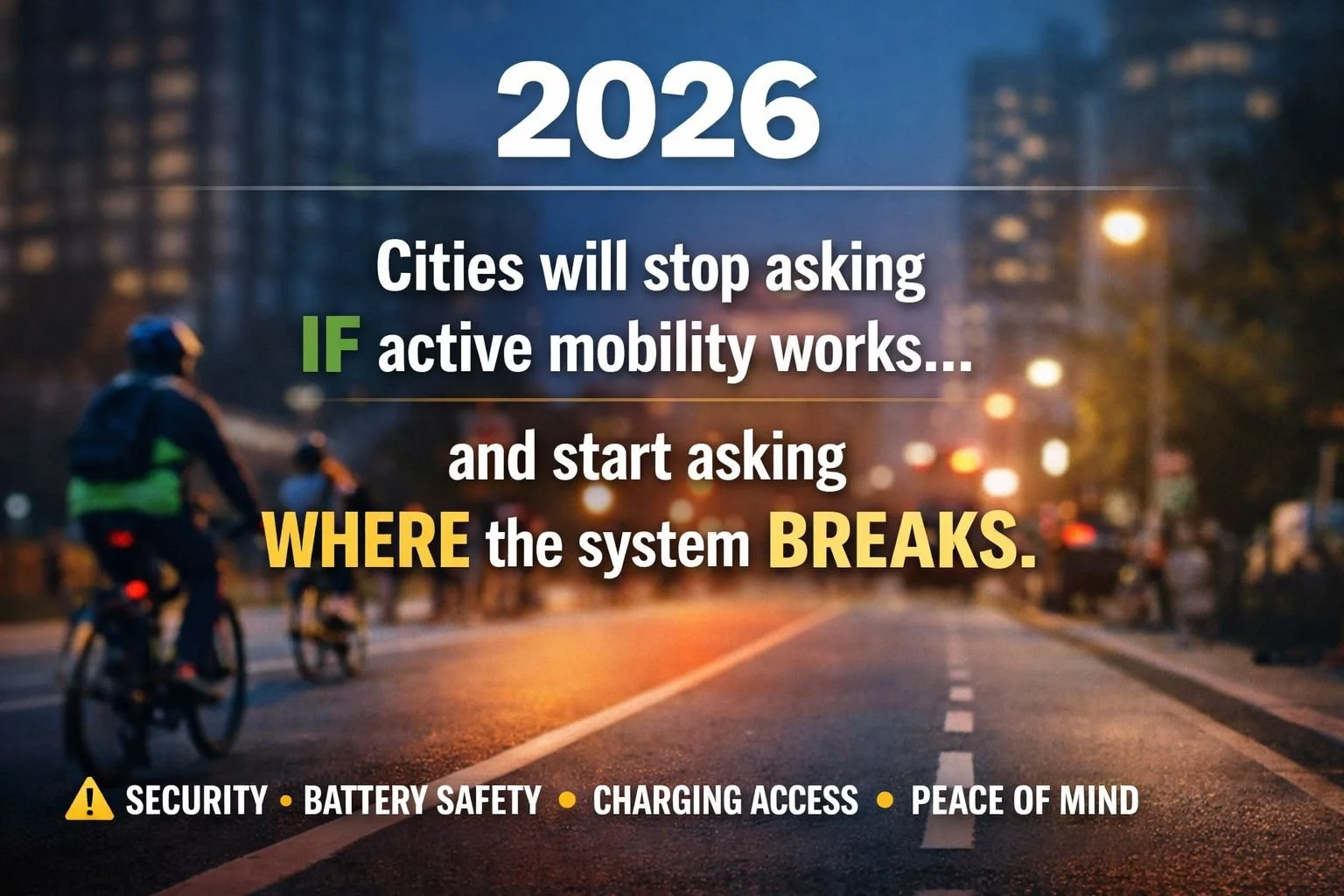
2026 won’t be about convincing people to bike
These are the friction points that determine whether active mobility scales—or stalls. And they matter far more than weather or cold temperatures.
In 2026, the cities that move the needle will be the ones that stop treating cycling as a “mode” and start managing it as a complete system, end-to-end.
Infrastructure is no longer the bottleneck.
Trust is.