
Where Road Safety Meets Cyclist Confidence
A cycling journey begins before someone gets on a bicycle. It begins with a decision: Can I get there safely? Where will I park? Will my bicycle still be there when I return? Protected routes and safer intersections help answer the first question. Secure bike parking, convenient access and appropriate e-bike charging arrangements help answer the others.
These needs connect two complementary systems: the Safe System Approach, which seeks to prevent road deaths and serious injuries, and a broader cyclist perspective that considers the entire journey—from departure to destination and back.
The five elements of the Safe System Approach
The Safe System Approach brings together five elements: safe road users, safe vehicles, safe speeds, safe roads and post-crash care. Its foundation is straightforward: people make mistakes, and those mistakes should not result in death or serious injury. Roads, vehicles, speeds, and emergency response must provide overlapping layers of protection.
A cyclist may misjudge a situation. A driver may overlook someone turning beside them. The system must anticipate these possibilities and limit their consequences. That protection weakens when its elements are addressed in isolation. A protected bicycle lane can lead directly into an exposed intersection. A posted speed limit can conflict with a street design that encourages faster driving. Vehicle blind spots can leave cyclists unseen. Delayed emergency response can worsen the consequences of a collision.
Each example reveals a gap between individual measures and a functioning system.
Cyclist confidence extends to the destination
For someone deciding whether to cycle, road safety is essential. Their decision also depends on what happens when they arrive. Can they reach the entrance without another traffic conflict? Can they park without lifting a heavy bicycle? Can they secure the frame, wheels, and belongings? If charging is needed, is there an appropriate place and a clear policy?
A complementary Cyclist Safety and Confidence framework brings six needs into view:
Safe routes.
Safe interactions.
Reliable bicycles.
Secure parking.
Safe battery care.
Easy access.
This is a proposed perspective on the cyclist’s experience. It complements the established Safe System Approach by considering security, usability, and practical destination needs alongside road safety.
Where the two systems meet—and fail
The strongest connections appear where one part of the journey hands responsibility to another.
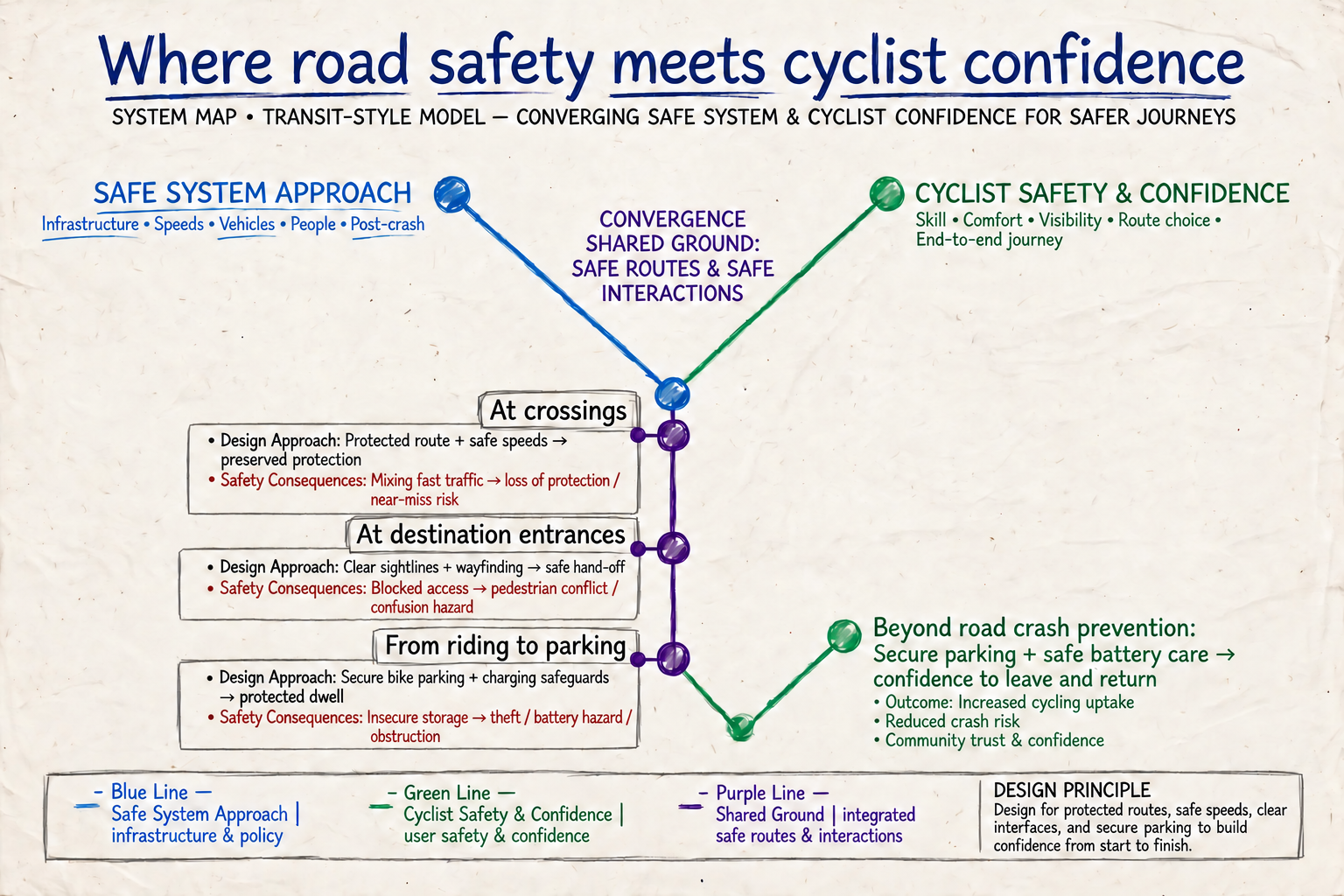
At crossings
Protection along a route must continue through its intersections. When a bicycle lane ends just before a difficult crossing, the cyclist loses protection precisely where interactions become more complex. Road layout, visibility and vehicle speeds must work together to support a safer crossing.
At destination entrances
Reaching the correct address does not necessarily mean reaching it safely. A cyclist may still need to cross a busy driveway, navigate a vehicle entrance or search for an unclear access point. The connection between the public route and the property deserves the same attention as either side of it.
From riding to parking
The final metres can determine whether a destination is genuinely usable. Parking behind stairs, through narrow doors or across pedestrian circulation areas can introduce new difficulties. A rack may be technically available yet impractical for a heavy e-bike, a cargo bicycle or someone who cannot lift their bicycle. The transition should be clear, accessible and designed to avoid unnecessary conflicts.
Secure bike parking completes the practical journey
A cyclist can arrive without injury and still find that the trip does not work. Inadequate theft protection, unavailable parking or nowhere to store belongings can make the destination unreliable. For e-bike users, battery storage and charging introduce additional considerations that require suitable equipment, manufacturer guidance and appropriate operating policies.
These concerns extend beyond road crash prevention. They affect whether people feel comfortable leaving their bicycles—and choosing them again tomorrow. For residents of apartment buildings, the same location serves as both departure point and return destination. Difficult access or insecure storage creates friction at both ends of every trip.
Design the connections, not just the individual facilities
Municipalities shape streets and crossings. Property owners shape entrances and parking. Operators manage access, availability and maintenance. Those responsibilities must connect at the two daily friction points of a cyclist’s journey: departure and arrival. For someone living in an apartment tower, the same building serves both roles. Difficult access, awkward bicycle storage or concerns about theft create a barrier before the ride begins—and another when the cyclist returns. A dependable journey therefore starts with being able to retrieve a bicycle easily and ends with being able to secure it confidently.
This is where Velovoute contributes: secure bicycle parking and storage at home and at the destinations people visit, with optional e-bike charging and smart access. Where deployed, the Bike Oasis platform adds reservations, access management, and payments, helping users plan their parking before setting out.
Together, these services complement investment in safer routes by reducing friction at both ends of the journey. Confidence at arrival begins before departure.
Safe routes protect people on the journey. Secure, accessible destinations give them the confidence to make that journey by bike.